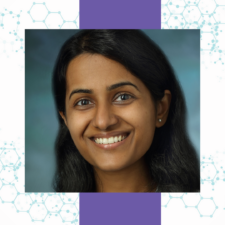
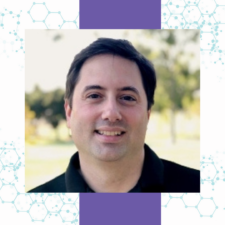
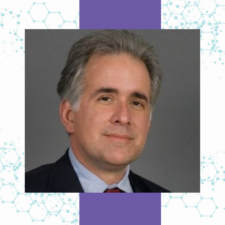
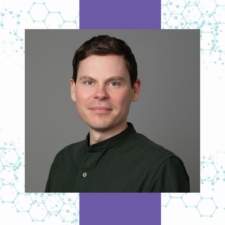
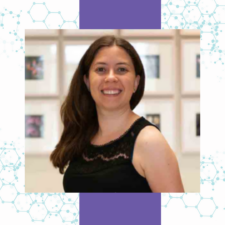
2026 Grant Recipient – Babitha Haridas
Improving the management of seizures in children with Lennox-Gastaut Syndrome Babitha Haridas, MBBS Johns Hopkins Medicine Highlights: Establishing a tailored approach to treating LGS children with prolonged seizures or status epilepticus. Identify factors triggering status epilepticus and refractory status…
More
2014 Grant Recipient – Elizabeth Thiele
Low Glycemic Index Treatment in Patients with LGS Elizabeth Thiele, MD, Ph.D. Massachusetts General Hospital Lay Abstract: Lennox-Gastaut Syndrome (LGS) is a highly refractory seizure disorder characterized by multiple seizure types, a slow spike-and-wave EEG pattern, and cognitive…
More
2026 Grant Recipient – Christopher Makinson
Preclinical therapeutic development using an ARHGEF9 mouse model of LGS Christopher Makinson, PhD Columbia University Highlights: Mutations in ARHGEF9 is causal for developmental and epileptic encephalopathy (DEE). Mouse model of ARHGEF9-DEE exhibit several types of spontaneous seizures including generalized…
More
2014 Grant Recipient – Brian Grone
A Zebrafish Model for LGS Dr. Brian Grone, PhD University of California, San Diego Highlights: Mutations in the synaptic gene STXBP1 are linked to childhood epilepsies and neurodevelopmental disorders, including LGS Zebrafish STXBP1 homologs (stxbp1a and stxbp1b)…
More
2024 Grant Recipients – Aditi Trivedi, Anthony Fine, & Juliet Knowles
North American Consensus for the Diagnosis and Management of Lennox-Gastaut Syndrome Highlights: To date, expert consensus recommendations for the care and treatment for LGS patients significantly vary from one another. A broad, systematic and comprehensive study to establish consensus recommendation…
More
2015 Grant Recipient – Candice Myers
Identifying Genetic Causes of LGS Candice Myers, PhD University of Washington Highlights: Performed whole-genome sequencing and targeted next-generation sequencing on DNA from patients with developmental and epileptic encephalopathy (DEE) and Infantile Spasms (IS) to identify underlying genetic causes of…
More
2015 Grant Recipient – Robert Hunt
CHD2 model for LGS Robert Hunt, PhD University of California Irvine Results: Pending Lay Abstract: I have been an active member of the Department of Anatomy & Neurobiology at UC Irvine since joining the faculty in 2015. My…
More
2016 Grant Recipient – Nicholas Poolos
Large scale analysis of antiepileptic drug efficacy in Lennox-Gastaut Syndrome Nicholas Poolos, MD, PhD University of Washington Highlights: Analyze a large cohort of antiepileptic drugs to better serve LGS patients Utilizing the SeizureTracker dataset, a self-reported, online dataset collected…
More
2017 Grant Recipient – Aaron Warren
Identifying neuroimaging predictors of treatment outcomes following deep brain stimulation in patients with Lennox-Gastaut Syndrome Aaron Warren, PhD University of Melbourne, Australia Highlights: We will study 20 patients who are participating in a recently commenced clinical trial where a…
More
2017 Grant Recipient – Vanesa Nieto-Estevez
Modeling Lennox-Gastaut Syndrome in Human Cerebral Organoids Vanesa Nieto-Estevez, PhD UT Southwestern Medical Center Results: Pending CHD2: One Gene, Many Roles Lay Abstract: Lennox–Gastaut syndrome (LGS) is a devastating epileptic encephalopathy in children characterized by multiple seizure types and…
More