meet the amazing doctors and scientists that make up our medical Science Advisory Council (MSAC)
The amazing group of individuals that make up our Medical Science Advisory Council (MSAC) is taking a stand against Lennox-Gastaut Syndrome by supporting the Foundation’s mission to accelerate LGS research. Each individual is dedicated to advocating for LGS families and advancing the goals of the LGS Foundation.
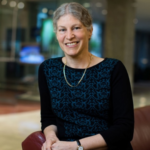
Chair, Mayo Clinic, Rochester
Dr. Wirrell is the Director of Pediatric Epilepsy at Mayo Clinic. She focuses on early-onset epilepsies and epileptic encephalopathies, such as LGS. Her clinical focus also includes ketogenic diet therapy and surgical therapy for epilepsy. Dr. Wirrell’s research activities include early diagnosis and treatment, prediction of medical intractability, and understanding common comorbidities of epilepsy. She is co-founder of the Pediatric Epilepsy Research Consortium, a multicenter U.S. group of clinicians that focuses on epilepsy in children. Dr. Wirrell is passionate about mentoring young residents and fellows. She is the director of the Child and Adolescent Neurology Residency Training Program at Mayo Clinic.
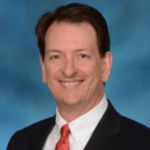
University of Maryland, School of Medicine
Dr. Crino is the Chair of the Department of Neurology at the University of Maryland School of Medicine. He is an internationally recognized physician-scientist specializing in developmental brain disorders. His laboratory has researched mechanisms of altered brain development associated with autism, intellectual disability, tuberous sclerosis complex (TSC) and defining developmental disorders associated with intractable epilepsy. Over the last 20 years, his lab has had continuous funding from the National Institutes of Health. He has coauthored over 150 peer-reviewed manuscripts, chapters, and reviews. Dr. Crino is an invited lecturer worldwide on topics such as neurodevelopmental disorders, epilepsy and TSC. Dr. Crino provides clinical care for adults with LGS.
University of California Irvine
Dr. Gelinas is an Associate Professor in the Departments of Pediatrics and Anatomy and Neurobiology at University of California Irvine. Her clinical practice focuses on infantile and childhood epilepsy, with a special interest in epilepsy surgery and intracranial electroencephalography (iEEG). In her current research, Dr. Gelinas is focused on understanding how epileptic activity disrupts the proper development and function of neural networks. The overall goal of her research is to identify novel biomarkers and systems-level treatments for epileptic disorders, especially those affecting neonates and children.
Stanford University
Dr. Knowles is an Assistant Professor in Neurology at Stanford. Dr. Knowles is a physician-scientist who provides clinical care for children with epilepsy and leads a lab team conducting basic, translational and clinical research on pediatric epilepsy. She is passionate about providing thorough, compassionate and innovative care for her patients, and her overarching goal is to use research as a tool to discover improved therapies for children with epilepsy. She is committed to mentoring the next generation of scientists and clinicians, from undergraduates interested in learning about lab research to medical students, residents and post-doctoral scholars.
Washington University
Dr. Nascimento is an Assistant Professor of Neurology at Washington University in St. Louis. Originally from Brazil, he completed medical school at the Universidade Federal do Paraná (UFPR) and then spent two years at the University of Toronto working as a research fellow in epilepsy genetics. Subsequently, he moved to Houston, Texas, to train as an adult neurologist at Baylor College of Medicine, followed by two years of clinical fellowship training in clinical neurophysiology and epilepsy at the Massachusetts General Hospital-Harvard Medical School. Dr. Nascimento’s research focus includes epilepsy genetics, transition of care, EEG, and education.

Washington University, School of Medicine
Dr. Shellhaas is a Professor of Neurology and Senior Associate Dean for Faculty Promotions & Career Development at Washington University School of Medicine. She is also the President of the Pediatric Epilepsy Research Foundation, a non-profit organization dedicated to supporting advances in the care of children with neurological diseases. Dr. Shellhaas’ research focus is neonatal neurology and early-life epilepsy, including approaches to seizure detection, improved treatment paradigms, and prediction of long-term outcomes for affected infants. She is also a leader in studies of sleep and sleep-disordered breathing and their impact on neurodevelopment in high-risk newborns.

Le Bonheur Children’s Hospital
Dr. Wheless is a Professor and the Chief of Pediatric Neurology at the University of Tennessee Health Science Center. He is also the Director of the Neuroscience Institute and Comprehensive Epilepsy Program at Le Bonheur Children’s Hospital. His research is focused on pediatric antiepileptic drug development, the ketogenic diet, epilepsy surgery device therapy, and noninvasive functional brain mapping. Dr Wheless is the author of more than 640 chapters, articles, and abstracts on these subjects. He has lectured widely on topics related to pediatric epilepsy. Dr. Wheless has received numerous honors and awards, including Top Doctors in US News & World Report, “Who’s Who in America”, “Who’s Who in Science and Engineering” and “Best Doctors In America”.

Northwestern University, Feinberg School of Medicine
Dr. Gerard is an Associate Professor of Neurology at Northwestern University’s Feinberg School of Medicine. Her clinical and academic interests focus on the care of women with epilepsy and epilepsy genetics. Inspired by patients seeking to understand the causes of their epilepsy, she developed an adult epilepsy genetics clinic and has co-directed Northwestern’s Adult Epilepsy Genetics Program since 2017. She currently leads the Genetic Epilepsy in Adults Network (GEAN). Dr. Gerard has expertise in clinical trials and epilepsy education. She is committed to training the next generation of adult epileptologists and to advancing care and research for adults with genetic epilepsies, developmental and epileptic encephalopathies (DEE) and Lennox–Gastaut syndrome (LGS), with a particular emphasis on improving their inclusion in clinical trials.
About our MSAC
The MSAC is established by the Board of Directors at its discretion and consists of clinicians, scientists, and others with expertise in the diagnosis, treatment, management, and investigation of LGS and its effects. The MSAC advises the Board-Led LGS Foundation Research Committee and helps guide the LGS Foundation program opportunities, educational needs, policy development, and strategic planning. Further, the MSAC evaluates research proposals and makes funding recommendations to the Research Committee that will advance science toward better treatments and cures for LGS. Our goal is to accelerate research that will improve the lives of LGS families.
Roles & Responsibilities:
Each MSAC member:
- Is fully versed in the goals and objectives of LGS Foundation’s programs
- Serves as an advocate for LGS Foundation’s programs and communicates programs to the broader community
- Actively participates in CURE LGS 365 grant review
- Attends annual LGS Foundation Research meetings
- Shares developments in the field
- Assists in the identification and recruitment of new MSAC members
- Makes recommendations to LGS Foundation staff regarding ideas for projects, grant proposals, and/or collaborations
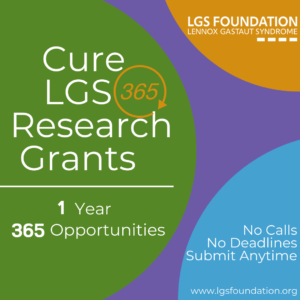 This novel funding mechanism allows researchers to submit letters of intent 365 days a year and funds worthy projects within two months of submission. With only a tiny fraction of public and private funds going towards research on LGS, families of the more than one million people with LGS worldwide worry that lifesaving, stabilizing treatment may not come to fruition in their loved ones lifetime. The LGS Foundation’s Cure LGS 365 Research Grants Program is combating these fears and aims to rapidly accelerate research.
Learn more
Updated 03/23/26 (KK)