Highlights from the 2025 American Epilepsy Society Annual Meeting
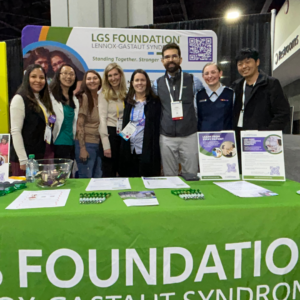
 The 2025 American Epilepsy Society (AES) Annual Meeting took place December 5–9 in Atlanta, Georgia, bringing together nearly 6,000 epilepsy clinicians, researchers, advocates, and industry partners from more than 60 countries.
Across the meeting, Lennox-Gastaut syndrome (LGS) was a clear focus — with new research, clinical insights, and collaborations aimed at improving seizure control, daily functioning, and quality of life for individuals and families living with LGS.
Why AES Matters to the LGS Community
AES is where research moves from ideas → data → real-world impact.
For families, this means:
-
Better understanding of why seizures happen
-
New approaches to treatment and care
-
Research shaped by lived experience
For professionals, AES is a forum to:
-
Share emerging science
-
Identify care gaps
-
Build partnerships that move the field forward
Key LGS Research Highlights from AES 2025
Research and clinical discussions focused on:
-
Noninvasive seizure treatments, including focused ultrasound
-
Understanding abnormal EEG patterns in LGS to guide treatment and prevention
-
Improving sleep, behavior, and other LGS-related comorbidities
-
Updated evidence on anti-seizure medication effectiveness
-
The importance of precision diagnosis, including genetic testing
-
The urgent need for better transition of care from pediatric to adult epilepsy services
Why this matters:
LGS affects more than seizures alone. Addressing sleep, behavior, and care transitions can dramatically improve daily life for individuals and families.
Research Spotlight: Advances from Academic Investigators
At AES 2025, researchers presented 78 abstracts focused on Lennox-Gastaut syndrome, covering medications, clinical care, and disease mechanisms.
Four presentations were supported by the LGS Foundation’s Cure LGS 365 Research Program.“We were incredibly excited by the significant interest and progress in LGS research presented. Crucially, these research areas are patient-centered, focused on enhancing the quality of life.”-Helen Chen, PhD
Focused Ultrasound: A Promising Noninvasive Approach
What was presented:
Dr. Ivan Soltesz (Stanford University) shared research showing that low-intensity focused ultrasound reduced seizure-like activity in an LGS mouse model with severe seizures and SUDEP risk.Why it matters:
Already FDA-approved for Parkinson’s disease, making future translation possible
Understanding Disease Progression Through New Models
What was presented:
Dr. Libor Velíšek (New York Medical College) introduced a new animal model that mirrors the progression from infantile spasms to LGS.Why it matters:
Fills a major gap in LGS research tools
Caregiver Voices Inform Quality-of-Life Research
Caregivers from the LGS community participated in a research study examining how seizures, sleep disruptions, and behavioral challenges affect daily life and communication for individuals living with Lennox-Gastaut syndrome (LGS) and related epilepsies.
What caregivers reported:
These challenges affect not only the individual but the entire family
Why this matters:
Seizure control alone does not capture the full impact of LGS. Quality-of-life research ensures care decisions reflect real-world needs
Looking Ahead: Expanding Patient-Centered Research
In early 2026, the LGS Foundation will launch Phase 2 of the Learn from Every Patient initiative:
LGS-CORE — the LGS & LGS-Related DEEs Collaborative Outcomes Registry
This registry will help:
Accelerate the development of new treatments and cures
LGS Foundation Research Impact
Over the past 15 years, the LGS Foundation has invested more than $2.4 million in LGS research, funding 16 Cure LGS 365 projects worldwide.
2026 research priorities include:
Pediatric-to-adult transition of care
Building Momentum Together
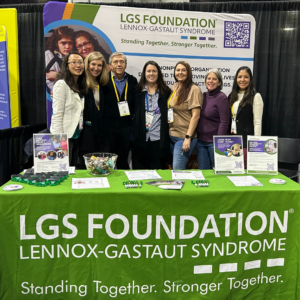
At AES 2025, the LGS Foundation strengthened existing partnerships and built new collaborations across research, healthcare, and industry. The shared commitment was clear: progress in LGS happens faster when families, clinicians, and researchers work together.
The LGS Foundation team left AES energized — inspired by the science, and grounded by the families whose experiences guide every step forward.
Updated 12/19/25 (KK)