
A long-term care planning needs assessment
 Overview
The LGS Foundation recently participated in a new study, published in Epilepsy & Behavior, which focused on the perspectives of caregivers who are planning for the adulthood of patients with Developmental and Epileptic Encephalopathies (DEE).
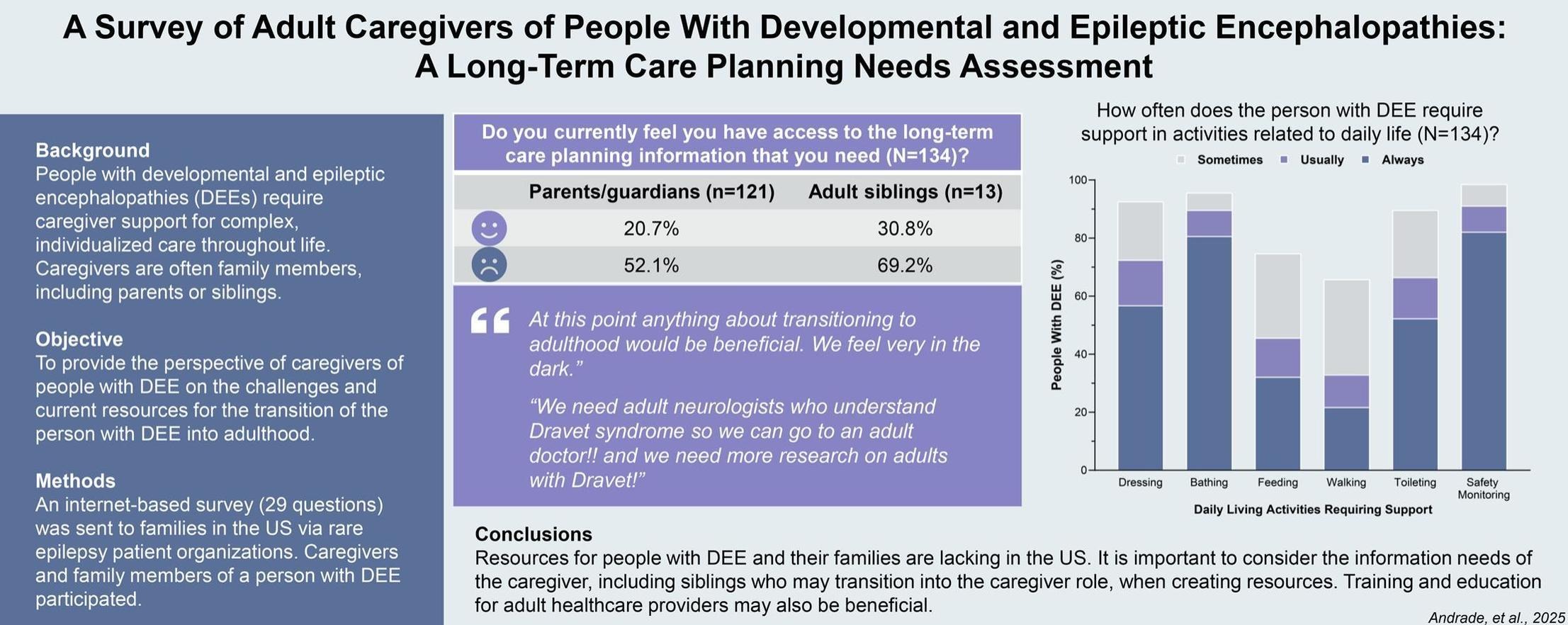
The anonymous, internet-based survey gathered information to assess the needs of DEE families. This study included family members of 134 people with DEE, 38 of whom were LGS families.
Key Findings
- ~50% of the respondents had not started planning the medical transition from pediatric to adult care. 78% indicated that they had inadequate access to resources and information, such as medical, legal and financial planning.
- Transition of care may become more difficult with an increasing number of healthcare providers, with an average of 6.6 healthcare specialists for people with DEE. The process may also be impacted by guardianship status.
- Barriers to medical transfer of care may include the difference between the pediatric and adult models of care, fewer resources available in the adult health care system, and the difficulty finding adult neurologists with proper training to manage adults with DEEs.
- Respondents would like to receive information such as appropriate assisted-living facilities, planning checklist for the transition of care process and healthcare providers with appropriate training to manage adults with DEE.
- Respondents most frequently communicated through direct mail and newsletters, while email was the least favored method.
Conclusion
Caregivers for people with a DEE need more resources and support for long-term planning, including transition to adult care, especially for future medical, legal, and financial needs. Resources should prioritize caregiver-identified information and preferred communication. Training adult healthcare providers on the needs of adults with a DEE is also needed.
Acknowledgement/Contributions
We would like to thank the caregivers and family members who participated in this study. This research was co-authored by LGS Foundation staff members Dr. Tracy Dixon-Salazar and Jennifer Griffin, as well as Dr. Scott Perry, a member of the Medical Science Advisory Council.
Updated 12/03/25 (AM)