Why Showing Up Matters
Every year, patient advocates, caregivers, and researchers from across the country travel to Washington, D.C. to attend Rare Disease Week on Capitol Hill, organized by the EveryLife Foundation for Rare Diseases. They bring one shared goal – to make sure the voices of the rare disease community are heard by policymakers.
This year, I had the opportunity to join members of the LGS community and hundreds of others who understand firsthand the challenges of living with or caring for someone with a rare disease. For many of us, advocacy is deeply personal. Behind every statistic is a person, a family, and a story.
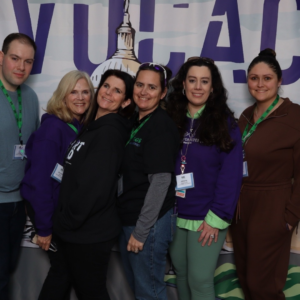 I was proud to be joined by Jamie Riley, Sandy Reynolds, Kurt Oberhausen, Amber Mathas, and Athena Staparounas, a dedicated group of advocates who made the sacrifice to leave their families to speak on behalf of the LGS community.
The week began with advocacy training sessions and community-building events. These sessions are great for first-time attendees, preparing them to meet with congressional offices and discuss policies that can make a real difference in their lives.
A one-day legislative conference was held on February 25th, followed by a Hill Day on the 26th. During the conference, leaders in the rare disease community, researchers, and policymakers spoke to the importance of research funding, access to care, and the urgent need for policies that support patients and caregivers.
On Hill Day, advocates met with congressional offices to share our stories and policy priorities. Here, we were able to remind lawmakers how the legislation that they vote on has real-world implications in our lives and the lives of the LGS community.
During our meetings, we asked lawmakers to support policies that would strengthen research, improve access to care, and provide much-needed support for caregivers.
These included:
- The National Plan for Epilepsy Act – Passed by Congress and signed into law by the President, a National Plan is a bill that leads to a federal investment in epilepsy, providing transformative resources for everyone living with, affected by, or working with epilepsy.
- The Credit for Caring Act/ Ley de Crédito Para el Cuidado would provide a federal tax credit to help offset out-of-pocket expenses incurred by family caregivers, many of whom provide complex, lifelong care for individuals living with rare diseases.
- The Genomic Answers for Children’s Health Act/ Respuestas Genomicas para la Salud Infantil is designed to expand Medicaid access to genomic sequencing testing to shorten the diagnostic journey for children with suspected rare diseases.
- Support funding and reporting language in FY 2027 for the Rare Diseases Innovation Hub to sustain critical regulatory infrastructure and collaboration.
- Support Congressional Action to Ensure Today’s Patients Will Benefit from Robust Rare Disease Treatment Pipelines
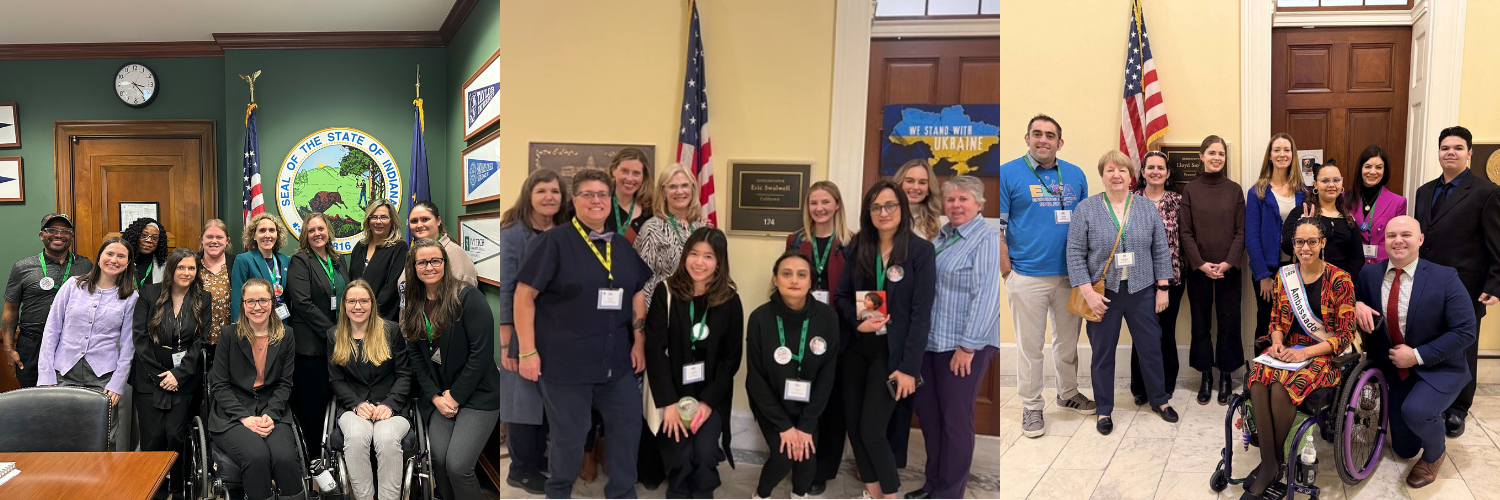
For those new to advocacy, meetings with policymakers may feel intimidating at first, but what quickly becomes clear is that personal stories matter. When lawmakers hear directly from families about the realities of rare disease, including the diagnostic odyssey, the financial strain, and the gaps in care, it helps shape how they understand these issues and how they vote! Here’s what our LGS advocates had to say about their own hill visits.
- Sandy (PA) – Representative Lloyd Smucker’s staffer – “She has been there for several years and remembers her constituents and their family’s needs. Smucker is already on board with all our asks, and the office was delighted with the positives that have changed over the last year.”
- Kurt (NH) – “Support the Credit for Caring Act – Caregivers are the unrecognized and unsupported backbone of our healthcare system, and the financial strain of caregiving affects the entire family.
- Genomic Answers for Children’s Health Act – New Hampshire remains one of the few states that does not cover whole genome or exome sequencing through Medicaid.
- National Plan for Epilepsy – A national plan would provide a coordinated strategy to prevent, diagnose, treat, and work toward curing epilepsy.”
- Amber (IN) – “NIH funding is important. There is a high rural population in Indiana. We urged our representative to bring clinical trials into the state (most go to Children’s Hospital in Cincinnati or Lurie Children’s in Chicago).
- Medicaid is our lifeline. A lot of rare disease families live in poverty, and financial strain breaks families apart.”
- Jen (CA) “Senator Schiff is a strong advocate for increased NIH funding.
- Senator Padilla is ‘on your side’ and extremely concerned about all the cuts and ‘chaotic energy’. He will support the asks.
- During one of my house meetings, 2 grandmothers spoke. It was their first time in D.C., and they were nervous. There were tears, and it moved all of us. They should be very proud of themselves for showing up and speaking on behalf of their grandson and his parents.
- Representative Swallwell – The National Plan for Epilepsy “seems like a commonsense ask”. We were urged to reach out to our Republican representatives because ‘they have the gavel”.”
- Athena (PA) – “This was my first time attending, and it meant so much to me and all of the other Advocates for LGS who felt seen around the country.”
- Jamie (NH) – “Representative Maggie Goodlander – I first wanted her to pass on a HUGE thank you. She added universal adult changing tables to all New Hampshire rest areas as part of her DOT bill.
- I asked Representative Goodlander, Senator Shaheen, and Senator Hassan’s staffers to share my request for support of the Credit for Caring Act. Imagine a tax credit for providing care for others! Finally, something to help offset the cost and stress of caring for our loved ones.”
 There is incredible power in showing up, in sharing our stories, learning from one another, and building relationships with policymakers who can help drive change.
Kurt Oberhausen said it best, “The issues that affect our communities have practical, bipartisan solutions. Solutions that strengthen us, improve access to care, and bring hope to millions living with rare and complex conditions.”
Advocacy doesn’t end in Washington. It continues in our communities every time we raise our voices for those living with rare diseases, in our schools when we advocate for inclusive special education services, and in our healthcare settings when we speak on behalf of our loved ones unable to speak for themselves.
Learn how you can be part of our advocacy efforts and help drive change for individuals living with LGS.
Updated 3/31/26 (KK)