LGS-CORE Study (Phase 2)
LGS and LGS-Related Developmental and Epileptic Encephalopathy Collaborative Outcomes Registry (LGS-CORE) Study
 Empowering Families, Advancing LGS Research.
The LGS & LGS-Related DEEs Collaborative Outcomes Registry (LGS-CORE) Study is a powerful tool for the LGS community to advance understanding of LGS, areas of unmet need, standards of care, and new therapies. Data from the registry is shared back to the LGS community and is also used by researchers and scientists. By participating, patient-families become part of the research team, helping to uncover trends in causes and diagnosis as well as new directions in therapies and treatment.
About How It Works Register FAQs User Guide
About the LGS-CORE Study
Developed in 2025 to accelerate research and the search for the cures for LGS and LGS-Related Developmental and Epilepsy Encephalopathy (LGS-DEE, the LGS CORE Study works by creating a platform for patient-families around the world to share information about LGS on developmental history, medical complications, and quality of life. By providing a means to collect and document the experiences, medications, symptoms, milestones, and other aspects of LGS from thousands of registry participants, it empowers LGS/LGS-DEE stakeholders to:
- Fully understand the full range of LGS/LGS-DEE characteristics
- Identify trends that generate new insights into LGS/LGS-DEE and areas for additional study
- Facilitate partnerships with university researchers and pharmaceutical companies
- Develop standards of care
- Expedite clinical trials by connecting registry participants with clinical trials and research studies
- Store LGS/LGS-DEE medical data in one place
- Accelerate treatments and cures for LGS/LGS-DEE

Sign Up
The LGS-CORE Study is only as powerful as the people who participate. Learning more about the experiences, medications, symptoms, milestones, and other aspects of LGS/LGS-DEE is key to advancing our understanding and discovering new therapies and treatments.
Visit the LGS-CORE Study website for more information. From there, register and help create a brighter future for individuals impacted by LGS/LGS-DEE.
This is about you, your journey, and your story. Register today to make your voice heard!
User Guide
Please see the user guide for more information on how to register, consent to the study, take surveys and set up the IAMRARE platform.
Latest Data From the Registry
Your participation helps us uncover new insights into LGS. We’ve translated many of these findings into easy-to-understand articles for families.
Explore insights from LGS-CORE Study
Frequently Asked Questions (FAQs)
The purpose of the LGS-CORE Study is to bring the LGS community together and collect data.
Some of the goals of the LGS-CORE Study are:
- To describe the people who have Lennox-Gastaut Syndrome and to better understand the stages of the disease and the different ways the disease affects people. To do this, we will ask about diagnosis, treatment, medical history, social and economic environment, and treatment outcomes.
- To understand how Lennox-Gastaut Syndrome changes over a person’s lifetime and to learn about clinical practice patterns and variations over the course of treatment.
- To help to develop best practices, management guidelines and recommendations so that clinicians can know how to give the best care to improve the quality of life and outcomes of people with Lennox-Gastaut Syndrome.
- To identify people with Lennox-Gastaut Syndrome who might be willing to take part in other research studies or clinical trials. You will be able to choose whether you want to hear about these other studies.
A patient registry is a collection of standardized information about a group of patients who share a condition. The information may be used for a variety of purposes such as conducting natural history studies and supporting disease specific clinical trial recruitment.
A natural history study is a study designed to track the course of a disease over time. It includes people who have a specific medical condition or disease. It may also include those who are at risk of developing the condition/disease. This type of research identifies demographic, genetic, environmental and other information that may be common within the disease and its outcomes. A natural history study can also show the differences in symptoms and changes over time that are seen in different people with the same disease. Natural history studies often aim to find unknown similarities within the disease population. They have many potential uses such as patient care best practice development and clinical trial recruitment. Data for natural history studies are often collected via patient registries.
Data is collected through a secure web-based application (that can be accessed by computer, tablet or phone) developed by the National Organization for Rare Disorders, Inc. (NORD®), (learn more about NORD below). Study participants respond to questions grouped within a series of surveys developed per study standards and in collaboration with disease specific experts.
The data collected includes, but is not limited to:
- Socio-demographics
- Medical and diagnostics
- Treatment and disease progression
- Management of care
- Quality of life
A Research Study Sponsor is an individual, company, institution, or organization. They are responsible for choosing appropriately trained and experienced researchers to conduct the study. They are also responsible for the initiation and management of a research study. Additionally, the sponsor is responsible for the costs associated with conducting a registry study. They ensure that the study is conducted in a reputable, ethical manner and upholds regulations as they apply to the study. The sponsor of this registry is the Lennox-Gastaut Syndrome (LGS) Foundation.
The Lennox-Gastaut Syndrome (LGS) Foundation is a nonprofit organization dedicated to improving the lives of those impacted by LGS. It educates the public about LGS, supports families living with the disease, and drives research to find the cures.
The Principal Investigator (PI) is the person with the primary responsibility for the design and conduct of the research project or study. The PI is responsible for oversight of all aspects pertaining to the conduct of the Registry, its staff and the research on the data contained within.
A Study Participant is the individual about whom information is entered into the registry and refers to an individual with LGS. If an individual is not of legal age or is an adult who requires someone to act on their behalf, a person (Caregiver/LAR, see below) who is legally responsible for their health care will provide consent and enter information about the Study Participant.
An LAR is someone who is authorized under applicable law to consent and enter data in the registry on behalf of another individual. The LAR may be a parent, grandparent, spouse, caregiver, or guardian as long as they have the legal authority to grant consent on behalf of that individual. An LAR will sign up on the LGS-CORE Study platform with a Caregiver account. When an LAR acts on behalf of a study participant, they are considered to be the reporter in the research.
A Designated Representative is a legal adult who was the caretaker of an individual who passed away from Lennox-Gastaut Syndrome. This may be a spouse, parent, sibling, offspring, close relative, close friend, guardian and/or significant other of this individual. This person must have had knowledge of and participated in the medical care of the deceased. These individuals are permitted to enter retrospective data on their behalf. A Designated Representative will sign up for an account on the IAMRARE platform. When a designated representative acts on behalf of a study participant, they are considered to be the reporter in the research.
An ICF is a document that provides potential participants with key information about the registry. This document helps potential participants to make an informed decision whether to join or not. Information will include topics such as: the risks and benefits of the research project, use of data, and participant privacy. If they choose to join the study, participants are required to electronically sign the ICF. This indicates that they agree to the terms as described before entering data into the registry or responding to surveys.
Participants are able to withdraw from the study at any time. However, researchers may still use the information that has been collected prior to the participant changing their mind. Information that has already been shared with researchers prior to withdrawal cannot be retrieved or removed.
An IRB is a board formally designated by an institution or investigator to review, approve the initiation of, and conduct periodic review of research involving people. The primary purpose of such an assessment is to assure the protection of the rights and welfare of the participants in the study. This is also known as an Ethics Committee (EC) or Research Ethics Board (REB in Canada).
A Registry Advisory Board is a committee that may include scientists, doctors, and patient advocates. They oversee the conduct of the study. The board advises on the development of surveys and reviews combined registry data and the use of this registry. They will ensure proper evaluation of all research requests for use of the registry data. They will also review any protocol or confidentiality deviations and ensure that any such deviations are reported to the IRB.
This study is open to anyone who has a Lennox-Gastaut Syndrome (LGS) or LGS-Related Developmental and Epileptic Encephalopathy (DEE) Diagnosis and meets the study inclusion criteria for participation.
LGS is a severe form of childhood-onset epilepsy and one of the most difficult to treat DEEs. LGS is characterized by three clinical features that develop over time in young children. These include:
- Multiple seizure types
- Cognitive impairment
- Characteristic patterns on the electroencephalogram (EEG) pattern. These are called slow spike and wave (SSW) and generalized paroxysmal fast activity (GPFA).
DEE is an emerging term for the numerous rare and severe epilepsies that commonly begin in infancy or childhood and include frequent seizures and cognitive impairment. This new term highlights both the developmental impairment seen in children (due to the underlying biology) and the epileptic encephalopathy (due to ongoing seizures and epileptiform activity), which jointly affect the child’s overall neurodevelopment. LGS is a common DEE.
An LGS-associated DEE would be anyone who has some of the 3 features of LGS, but not all.
There is no cost to the patient or patient-family to join this study.
You will not be paid for the information you provide.
The study will ask you to report the following. Please have them ready if available:
- Genetic testing reports
- EEG reports showing LGS diagnosis
- List of current anti-seizure treatments (medications, diets, over the counter, homeopathic, other)
- List of brain surgeries and implantations
- Seizure tracking information
A registry on the IAMRARE platform will typically be open for at least five years. Participants will be asked to return to the registry periodically to update their information.
The registry uses an online platform which allows participants to contribute data from anywhere in the world. Individuals from other countries who enter data into the registry should be aware that data and privacy laws are different in the U.S. from other countries. This U.S. based registry will protect data and privacy according to U.S. requirements.
For individuals living outside the United States who choose to share information about themselves, the same protections for privacy and confidentiality are offered as in the United States. Residents of the European Union and Switzerland have additional particular rights related to personal information. This information is disclosed within the informed consent document. If an individual signs this document, they acknowledge that they are disclosing information that would otherwise be private. Privacy laws in an individual’s country may have different protections than those provided in the United States.
Registry participants who are residents of the European Union and Switzerland are entitled to:
- Request to obtain access to and rectification or erasure of personal data;
- Receive personal data in a portable, readily-accessible format;
- Restrict or withdraw permission for the processing of personal information; and
- Lodge a complaint with an appropriate supervisory authority.
NORD stores Sponsor and Participant Registry Data on NORD encrypted servers and/or encrypted servers of third-party vendors hosted in Canada. Regular back-up at commercially acceptable intervals is provided. These servers meet industry standards and are compliant with U.S. and international regulations, including GDPR.
The registry follows strict government guidelines to assure patient information is protected. The platform is served over HTTPS, which means that the data is encrypted when being sent from the user’s browser to the NORD servers. The data is also kept encrypted in the NORD database. Communications between the registry platform application server and the database are also encrypted. As with any information you provide electronically, there is a very rare chance that your privacy could be compromised. However, the registry and the security measures minimize the chance of this occurring.
The study data are owned by the individual with LGS and their representatives and are stewarded by the study sponsor, the LGS Foundation. The LGS Foundation decides how and with whom to share the data. NORD staff will have access to the data for activities related to support and maintenance of the platform and will collect platform-wide participation statistics. The specifics will be outlined in your informed consent.
All data, including those with PHI, will be stored in a password protected secure server. Access to PHI will be limited to:
- Approved members of the LGS-CORE Study research team
- NORD staff, in cases where technical support is needed and with the permission of registry staff
- With agreement from the Sponsor, NORD may conduct IRB-approved, cross-disease research using registry data.
In all cases, your privacy will be protected. The Registry Advisory Board will evaluate all requests for data from researchers. Researchers will only be provided with the minimum data necessary to accomplish their research study goals. Data containing PHI will only be shared if the research cannot be done without it. The researchers will be required to sign a Confidentiality Agreement in which they promise to keep your information safe.
The registry is maintained by NORD who hosts the registry on its web-based application. NORD provides ongoing technical support of the system. The LGS Foundation provides the day-to-day management of their patient registry.
NORD, an independent nonprofit, is leading the fight to improve the lives of rare disease patients and families. We do this by supporting the rare community, its people, and organizations. We work together to accelerate research, raise awareness, provide valuable information, and drive public policy that benefits the estimated 25-30 million Americans impacted by rare diseases. Learn more about NORD at https://rarediseases.org.
If you need more information on how to register, consent to the study, take surveys and set up the IAMRARE platform, you can find information at:
- Step 1: LGS-CORE Study Participant User Guide
- Step 2: Click “Help” on the top right of the page on the IAMRARE platform, then select an “Inquiry Type” and type a message. Click Submit to reach out.
- Step 3: Contact the study sponsor, the LGS Foundation directly by email: research@lgsfoundation.org or by phone 718-374-3800
Still Have Questions?
We’re here to help! Email us at research@lgsfoundation.org.
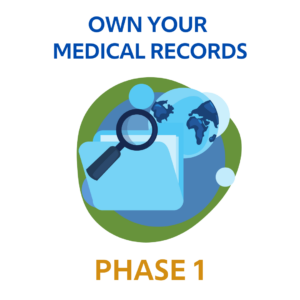
Implemented in 2023, the LGS Learn from Every Patient Database collects medical records about those with LGS/LGS-DEE to document the impact of LGS on a person’s health over their lifetime. This information can be used to help understand what treatments work in LGS/LGS-DEE, LGS-associated comorbidities, such as sleep, communication, feeding, and behavioral issues, are managed, and how LGS/LGS-DEE evolves with aging.
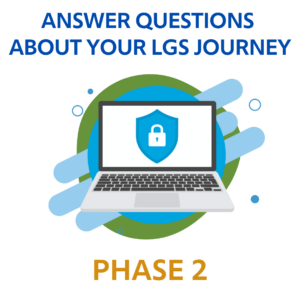
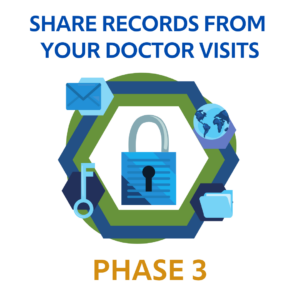
The LGS Learn from Every Patient Database consists of three phases:
Updated 09/30/26 (AM)